
In today’s globalized world, advertising is more than just selling products — it’s about creating connections, telling stories, and understanding audiences across cultures, genders, and social backgrounds. Yet many campaigns still fall flat, failing to resonate with the people they aim to reach. A critical reason? The lack of diversity within the teams creating them. Homogeneous teams — those made up of individuals with similar backgrounds, experiences, and perspectives — tend to produce homogeneous ads that can feel predictable, stereotypical, and disconnected from real audiences.
Why Homogeneity Limits Creativity
A homogeneous team often shares similarities in ethnicity, gender, socioeconomic background, education, or even ways of thinking. While this can make day-to-day collaboration smooth, it narrows the creative lens. Teams that think alike are less likely to question assumptions, explore unconventional ideas, or see the world from perspectives different from their own.
For example, a team lacking gender diversity might overlook the nuances of how women interact with a brand. A team without cultural variety may miss opportunities to connect with multicultural audiences. Without these perspectives, ads risk relying on clichés, stereotypes, or predictable storytelling.
The Risks of Homogeneous Advertising
- Stereotyping: Ads may unintentionally reinforce clichés because the team lacks the lived experience to see alternatives.
- Narrow Targeting: Campaigns often appeal only to a familiar demographic, missing broader audiences.
- Cultural Blind Spots: Without diverse perspectives, campaigns are more likely to misstep in global or multicultural contexts.
- Stifled Creativity: When everyone thinks alike, innovation suffers, and campaigns feel repetitive or uninspired.
Diversity Drives Better Advertising
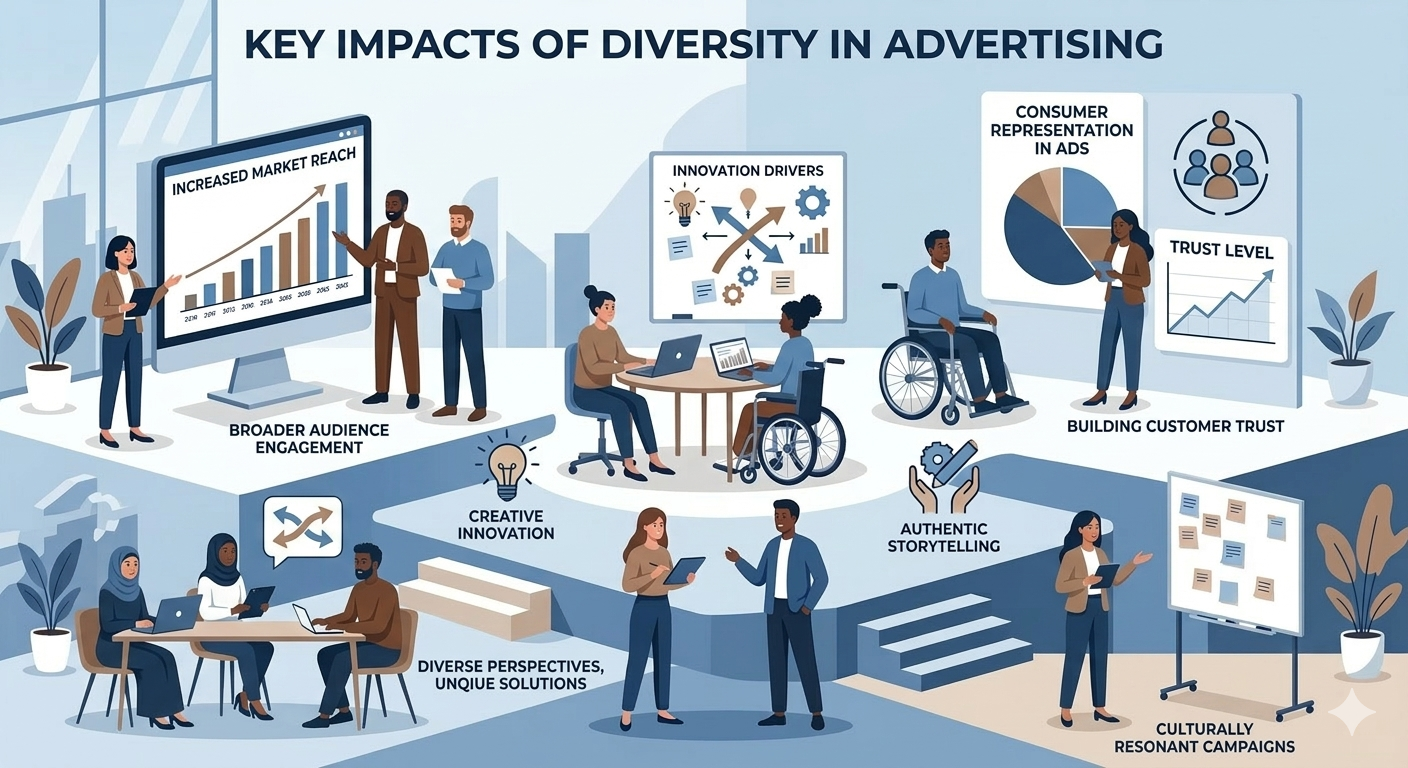
Diverse teams do more than check boxes — they expand the creative toolkit. Different life experiences, cultural understandings, and problem-solving approaches create campaigns that feel authentic and resonate with audiences.
- Authenticity: Ads reflect real human experiences, making them more relatable.
- Innovation: Exposure to diverse viewpoints sparks fresh, unconventional ideas.
- Market Reach: Teams better understand multicultural audiences, improving relevance across demographics.
Companies like Cybertron Ads are proving that diverse teams make advertising more engaging and inclusive. The same principle applies to global brands like Dove and Nike. Dove’s “Real Beauty” campaign celebrated women of all sizes, shapes, and colors, while Nike’s ads feature athletes of different genders, abilities, and backgrounds. Across the board, campaigns succeed when teams embrace different perspectives — turning ads into stories audiences connect with.
Moving Toward Inclusive Advertising
To counteract homogeneity, brands can:
- Recruit and retain talent from underrepresented groups
- Encourage open dialogue and challenge assumptions within teams
- Test ideas with diverse audiences to identify blind spots
- Promote leadership that champions equity in creative decisions
Conclusion
Advertising shapes culture and perceptions. Homogeneous teams risk creating ads that are one-dimensional, uninspired, and disconnected. In contrast, diverse teams enrich the creative process, producing campaigns that feel authentic, engaging, and reflective of real audiences. From Cybertron Ads to global campaigns like Dove and Nike, the evidence is clear: diversity doesn’t just make advertising fairer — it makes it better. For brands seeking meaningful connections in a multicultural and socially aware world, diversity is not just a moral choice — it’s a business imperative.