
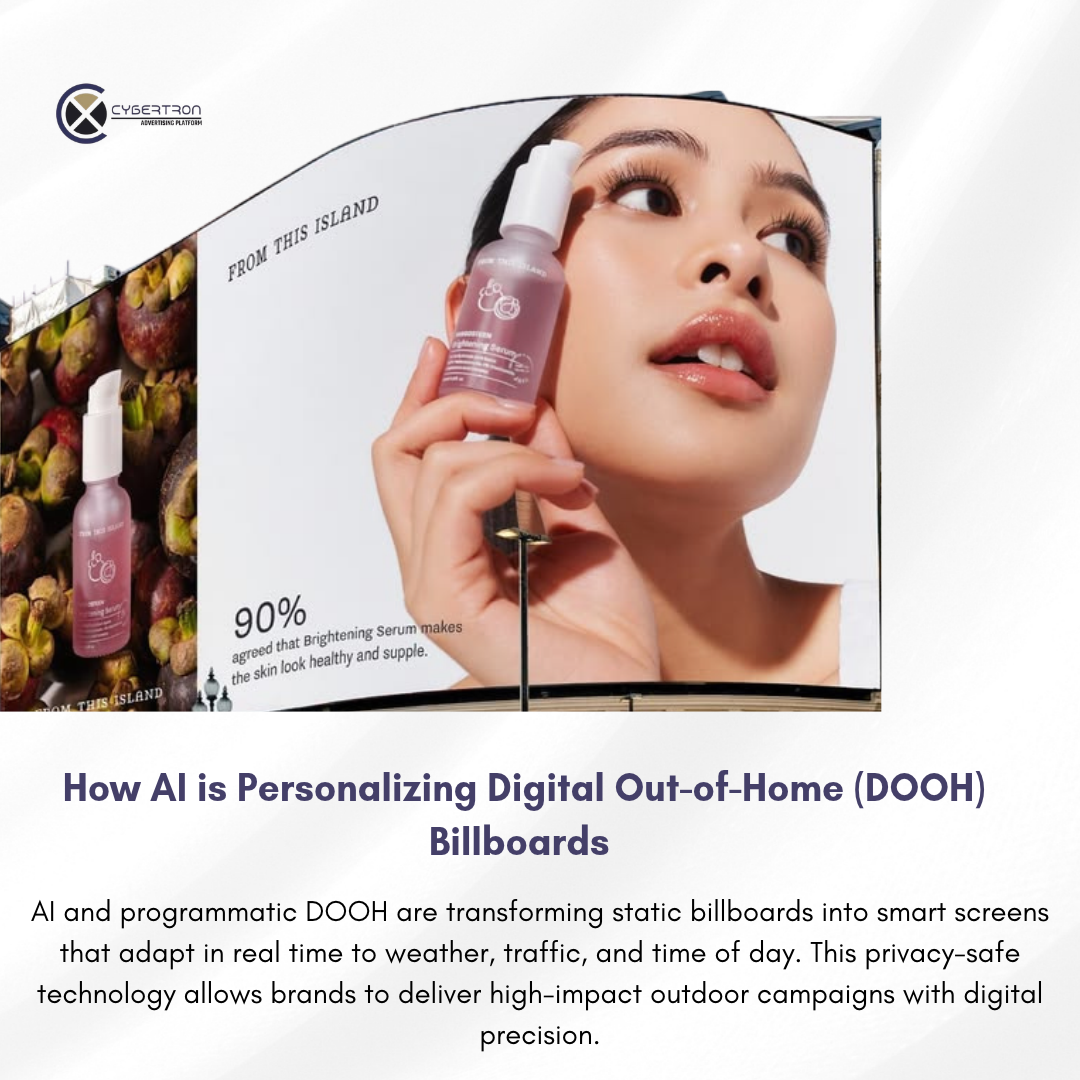
For decades, traditional out-of-home advertising relied on a static formula: secure a high-traffic physical location, mount a single printed vinyl board, and leave the visual unchanged for weeks at a time. While this approach guaranteed broad exposure, its ability to deliver timely, context-relevant messaging was severely limited.
Today, the combination of Artificial Intelligence (AI) and Programmatic Digital Out-of-Home (pDOOH) is fundamentally reshaping physical outdoor media. Modern digital screens no longer display static images to passive crowds; instead, they use live data feeds to adapt ad content based on real-time conditions, making outdoor campaigns more engaging, relevant, and measurable.
1. Moving from Fixed Locations to Smart Audience Buying
Historically, buying a billboard meant locking into a single physical site regardless of who walked or drove past throughout the day. AI-driven programmatic buying changes this model by focusing on live environment signals and crowd movement rather than fixed calendar slots.
- Traditional Outdoor: Locked into multi-week contracts, fixed location site selection, static artwork, and reliance on estimated historical traffic counts.
- AI-Powered pDOOH: Flexible CPM models (pay per actual impression), real-time creative updates, and dynamic ad placement triggered by live traffic, weather, and footfall metrics.
2. Real-Time Personalization via Dynamic Creative Optimization (DCO)
At the heart of personalized DOOH is Dynamic Creative Optimization (DCO). AI algorithms automatically evaluate environmental variables and instantly select the visual asset or ad copy designed for that precise moment.
Common Real-World AI Triggers:
- Weather & Temperature Adjustments: A beverage brand can automatically feature hot drinks during cool, rainy mornings and switch to cold refreshing options as afternoon temperatures rise.
- Traffic Flow & Vehicle Speed: During heavy rush-hour traffic when vehicles move slowly, AI can serve longer, narrative copy. When traffic moves at high speeds, it switches to bold, quick-read visual messaging.
- Time-of-Day Transitioning: Fast-casual restaurants can update visuals continuously—promoting morning coffee and breakfast items, transitioning to lunch specials at noon, and showcasing quick dinner options by evening.
- Geofenced Context: Screens located near specific commercial hubs or retail stores can display directional prompts to guide nearby foot traffic directly to a store location.
3. Smarter Targeting with Privacy-First Design
Personalizing screens in public environments often raises questions about privacy. Unlike online tracking, modern AI-powered DOOH operates without collecting personal data or individual identities.
AI camera sensors and analytics tools process aggregate crowd signals only:
- Impression Calibration: Measuring total pedestrian density and vehicle traffic volume passing a display to calculate accurate impression counts.
- Anonymous Data Streams: Reading general movement trends and crowd flow patterns without capturing, storing, or processing personally identifiable information (PII).
This privacy-first approach gives advertisers data-backed precision while remaining fully compliant with global privacy standards.
4. Scaling Smart Outdoor Campaigns with OutWrld
Outdoor media is no longer an isolated offline channel. Today, it operates as a flexible, data-driven component of a complete digital marketing strategy.
Through Cybertron Ads and our OutWrld programmatic DOOH platform, brands can launch, manage, and optimize dynamic outdoor campaigns across top digital screens with full flexibility. By integrating real-time data triggers and flexible budget controls, OutWrld brings the targeting accuracy of online advertising directly to physical billboard networks.
Ready to bring smarter targeting to your next outdoor campaign? Reach out to the Cybertron Ads team to learn how OutWrld can elevate your brand’s digital billboard strategy.