
In Nigeria’s advertising landscape, static billboards remain one of the most widely used outdoor advertising formats. Despite the rise of digital and programmatic solutions, many brands — from SMEs to large corporations — continue to invest heavily in traditional billboard placements.
But why?
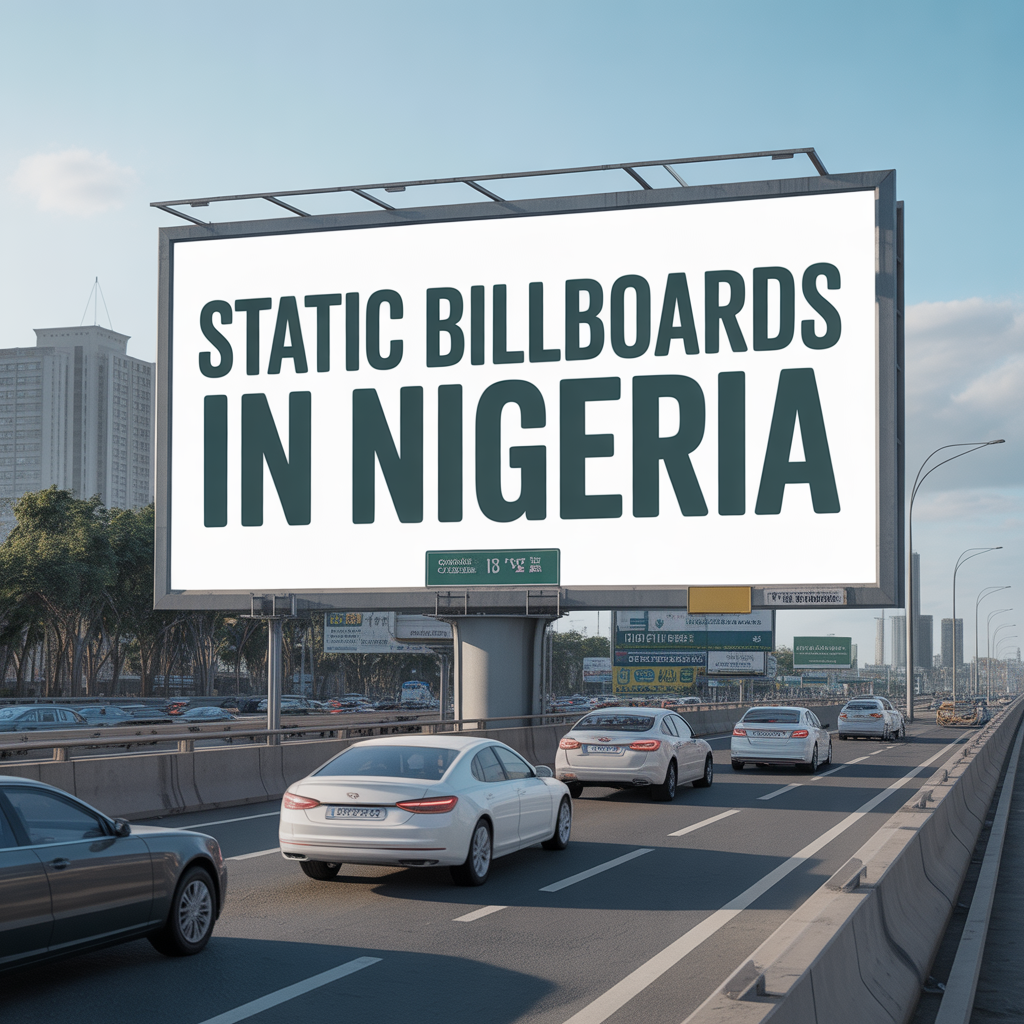
Why Static Billboards Are Popular in Nigeria
1. High Urban Traffic Exposure
Cities like Lagos, Abuja, and Port Harcourt experience heavy daily traffic. Long commute times mean prolonged exposure to roadside advertising.
2. Perceived Prestige and Authority
A billboard in a prime location signals scale and credibility. For many businesses, physical visibility equals brand legitimacy.
3. Simplicity and Predictability
Static billboards offer fixed costs, fixed duration, and predictable placement. There are no technical dependencies or digital infrastructure requirements.
4. Accessibility for SMEs
Compared to high-tech digital advertising systems, static billboards are often easier to access through local media vendors.
The Demerits of Static Billboards
However, while static billboards offer visibility, they also come with clear limitations.
1. No Real-Time Flexibility
Once printed and mounted, creative cannot be adjusted quickly. If messaging underperforms, correction is slow and costly.
2. Limited Measurement
Unlike digital advertising, static billboards do not provide direct performance data. Advertisers rely largely on estimated traffic numbers.
3. High Production Costs
Printing, installation, and replacement add to overall cost — especially for short campaign cycles.
4. Creative Fatigue
With prolonged exposure and no variation, audiences may stop noticing the message over time.
The Emerging Shift
Many Nigerian brands are now exploring a hybrid approach — combining static outdoor placements with digital amplification and measurable channels.
This allows businesses to retain the authority of physical presence while gaining flexibility and performance tracking from digital systems.

Final Thought
Static billboards remain powerful in Nigeria because visibility still matters — especially in high-density urban centers.
But visibility alone is no longer enough.
The future lies in combining strong physical presence with smarter, measurable execution.
 Thelma Okwuose